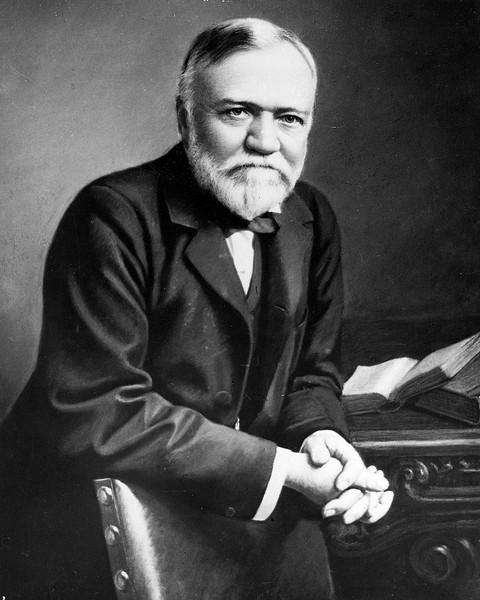
Mostly known for his booming steel industries, Andrew Carnegie became one of the richest men of his time and of modern times. Born in Dunfermline, Scotland in November 25, 1835, he lived with his family in their natural traditions. Upon the economic decline of 1849, Carnegie emigrated to America, where he began his rise to fame. Carnegie embodies the "rags-to-riches" concept from his work as a paper boy at 12 to a multi-millionaire monopoly of the steel industry.(1) Though Carnegie didn't act so prolificly for reform, one specifically caught his attention. Around the beginning of the 20th century, Carnegie began to emphasize his devotion to world peace. He believed that to obtain peace, communication should be key; he believed that a universal language was the obstacle to bringing the races together as a nation. He hoped that English would be said universal language; he pushed for the American Simplified Spelling Board to facilitate change, however not only did it take four years to start it but the Board was very close to disband when it first formed. Carnegie funded the Spelling Reform Association with the suggestion of the chairman, Melvil Dewey. He funded them very generously, and with his help they developed the Simplified Spelling Board. Many words such as, "bizness," "feather," and "plesure" have become what we know in the English language today. However, these spelling reforms were met with slight controversy. The English condemned it, saying that it would destroy the past works of important literature, such as Shakespeare; on the other hand, many Americans, including Theodore Roosevelt, supported these changes. Mark Twain thought that the reforms could be emphasized even further. For unexplained reasons, Carnegie eventually dropped his support for spelling reform. Though the Spelling Reform Associations eventually disbanded due to a lack of funding, they formed small factions which last today as the American Literacy Council. (2) |
 |
|
(1). Andrew Carnegie. Spartacus Educational. http://www.spartacus.schoolnet.co.uk/USAcarnegie.htm. Accessed 1/22/13. (2).The Forgotten Crusader: Andrew Carnegie and the simplified spelling movement. The English Spelling Society. http://www.spellingsociety.org/journals/j26/carnegie.php. Accessed 1/22/13. Background: http://www.tutbase.com/tutorials/photoshop/text-effect/rusty-create-rusted-metal-text.html Banner: http://www.ohiosteel.org/industry/index.php Portrait: http://www.forbes.com/pictures/mjd45fmme/andrew-carnegie/ |
||
